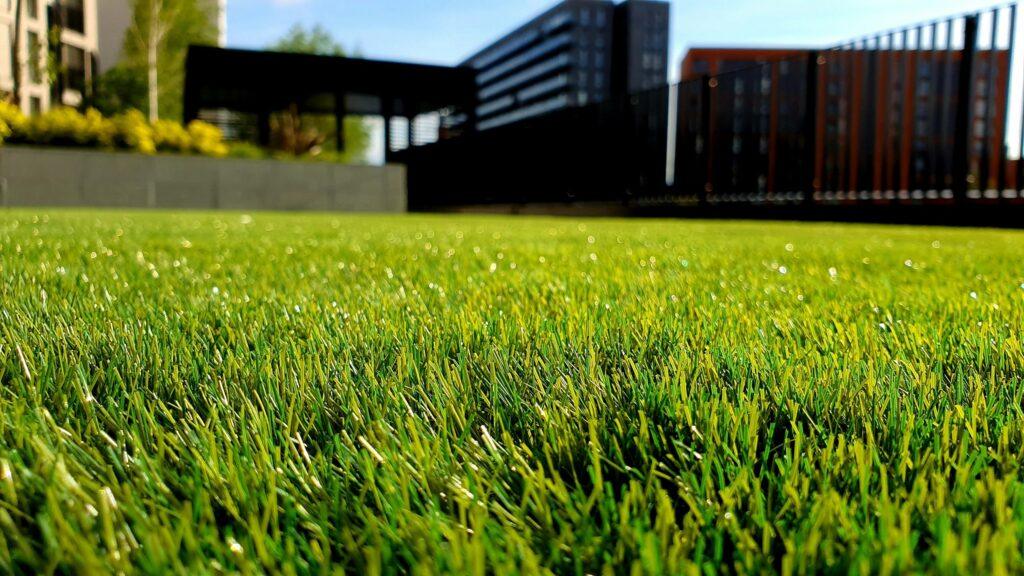

Laying turf looks deceptively simple. Roll it out, water it, and within weeks you have a finished lawn. In practice, most of the patchy, uneven, or short-lived lawns we are called out to repair across Essex were not let down by poor quality turf. They were let down by ground that was not prepared properly first, turf laid at the wrong time of year, or aftercare that stopped too early.
This guide covers the three stages that actually determine whether a new lawn establishes well: preparing the ground correctly, particularly on the heavy clay soil common across Chelmsford and much of Essex, choosing the right time of year, and following through with the aftercare that gets a lawn properly rooted rather than just laid.
At PaveRose Driveways and Landscaping, turf laying is one of our core landscaping services across Chelmsford and the wider Essex region, and we are called in regularly to fix lawns that were laid without the groundwork covered in this guide. For related reading, also see our comparison of real turf vs artificial grass for families and pets.
Why Ground Preparation Matters Most on Essex Clay
Turf is only as good as the ground underneath it. Much of Chelmsford and the surrounding Essex area sits on heavy clay soil, which behaves very differently to the lighter, free-draining soils that most generic online turfing advice is written for. Clay compacts easily, drains slowly, and swings between waterlogged in winter and rock hard in summer. Skipping proper preparation on this kind of ground is the single biggest reason new lawns fail.
Clearing the Site Properly
Start by removing the existing lawn, weeds, and any debris down to bare soil. Where the old lawn is patchy rather than completely failed, it is tempting to skip this step and lay turf straight over the top, but this traps a layer of old, often compacted turf beneath the new roll, which interferes with rooting and drainage. Full removal, or at minimum thorough scarifying and de-thatching, gives the new turf a clean surface to root into.
Cultivating and Improving Heavy Clay Soil
Clay needs to be broken up and improved before turf goes down, not afterwards. Rotavating to a depth of at least 100 to 150mm breaks up compaction and creates a workable tilth rather than a solid, sticky surface. Working in well-rotted organic matter, garden compost, or coarse grit at this stage genuinely changes how the soil behaves, improving both drainage in winter and moisture retention in summer rather than leaving the clay to swing between the two extremes.
This is the stage that is most often rushed or skipped entirely on DIY turfing jobs, and it is also the stage that makes the biggest long-term difference to how the lawn performs through an Essex winter.
Levelling and Grading for Drainage
Once cultivated, the soil needs levelling with a gentle, consistent fall so surface water moves away from the house and any patio or driveway rather than collecting in the centre of the lawn or against a boundary. Stones, roots, and large clods should be removed at this stage, since anything left in the ground will show through as bumps and interfere with mowing later. The surface is then lightly compacted, typically by treading it down evenly or using a roller, and raked to a fine, even finish ready for turf.
| In plain terms:
On Chelmsford’s clay, ground preparation is not optional extra work, it is the difference between a lawn that establishes well and one that waterlogs every winter. Rotavate, improve with organic matter, and grade for drainage before any turf goes down. |
Best Time of Year to Lay Turf in Essex
Timing affects how easily turf establishes and how much aftercare it needs. The general horticultural guidance, including the Royal Horticultural Society’s advice, points to autumn through to early spring as the easiest window, while commercial turf suppliers in Essex also lay successfully through spring and summer provided the watering commitment is met.
Autumn and Spring: The Easiest Windows
Mid-autumn is generally considered the ideal time to lay turf. The soil is still warm enough to encourage root growth, rainfall is more reliable, and the grass does not need to cope with summer heat stress while it is establishing. Spring is the next best window, particularly March to May, when the soil has warmed after winter and natural rainfall reduces how much supplementary watering is needed, though turf laid in spring will often need extra watering through the following summer while it finishes establishing.
Laying Turf in Summer on Essex Clay
Summer laying is possible, but it is the most demanding window, especially on clay. Essex clay that has dried out over a warm spell becomes hard and can crack at the surface, which makes both ground preparation and turf establishment harder work. If turf must be laid in summer, the clay needs thorough cultivation and a deep, even initial watering before laying, and the daily watering commitment afterwards is non-negotiable, since the turf will dry out and shrink within hours without it.
Winter Laying: What to Check First
Turf can be laid through winter provided the ground is not frozen or waterlogged at the time. On Essex clay, waterlogging is the more common problem: if the site is holding standing water or the soil is so wet that it sticks heavily to boots, it is better to wait for a drier spell or improve the drainage first rather than lay turf into saturated ground. Newly laid winter turf needs very little watering, since rainfall usually does the job, but it also roots more slowly in cold soil and should be left undisturbed for longer before the first cut.
Laying the Turf Correctly
Sourcing Fresh, Same-Day Turf
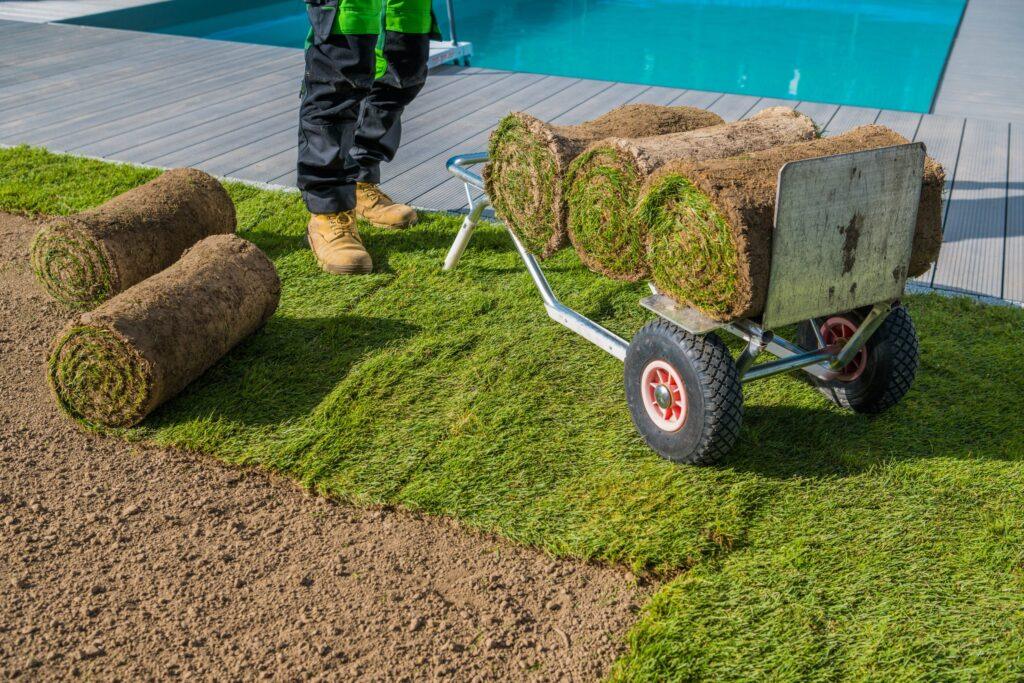
Turf is a living, perishable product. It should ideally be cut and delivered the same day it is laid, and never left rolled up for more than a day or two, since rolled turf heats up internally and begins to deteriorate within hours, particularly in warm weather. If there is any delay between delivery and laying, unroll the turf and keep it shaded and watered rather than leaving it stacked.
Staggered Joints and Tight Seams
Turf rolls should be laid like brickwork, with the joints in each row staggered against the row before rather than lining up, which avoids creating a single weak seam line running across the lawn. Each roll should be butted tightly against its neighbour with no gaps and no overlap. Gaps between rolls dry out fastest and are the most common place for weeds to establish in a new lawn.
Edges, Borders, and Awkward Shapes
Edges against paths, borders, and driveways should be trimmed with a sharp half-moon edging tool or a knife for a crisp, defined line, cut after the turf is laid rather than trying to pre-cut pieces to fit. Curved borders and awkward shapes around trees, manholes, or features should be worked around with small offcuts rather than large gaps, keeping joints as tight as on the main lawn area. Once the area is laid, the whole lawn should be rolled or firmly tamped down to ensure good contact between the turf and the soil beneath, which is essential for even rooting.
Aftercare: The First Few Weeks Are Critical
More new lawns fail at the aftercare stage than at the laying stage. The first few weeks determine whether the turf roots evenly into the soil beneath or dries out, shrinks, and leaves visible gaps.
The First Watering and the First Two Weeks
Water thoroughly within an hour or two of laying, enough that the soil beneath the turf is genuinely damp, not just the grass blades on the surface. You can check this by gently lifting a corner. For the first one to two weeks, water daily, and twice a day during hot or windy spells, since newly laid turf with no established roots can dry out and shrink within hours in warm weather, opening gaps between rolls.
Weaning Off Daily Watering
From around week two onward, begin easing off the frequency as the roots start to take hold; watering every other day in week three and then as needed for the season from week four is a reasonable approach for most Essex gardens, adjusted for rainfall. The aim throughout is consistently moist soil beneath the turf, not waterlogged ground, which matters particularly on clay where excess water has nowhere to drain to quickly.
When to Mow for the First Time
Do not mow until the turf has rooted. Test this by gently tugging a corner: if it lifts easily, it is not ready. If it resists and feels firmly attached, usually around two to three weeks after laying depending on the season, it is ready for its first cut. Set the mower to its highest setting for the first few cuts and never remove more than around a third of the blade length at once, since a hard first cut on unrooted turf can pull the grass loose rather than trim it.
Keeping Foot Traffic Off the New Lawn
Keep foot traffic to an absolute minimum for at least the first two to three weeks, and longer in cooler months when rooting is slower. Repeated compression before the roots have developed is one of the most common causes of uneven, patchy establishment, since it presses the turf back down before it has bonded with the soil beneath. If access across the new lawn is unavoidable, laying scaffold boards to spread the weight reduces the damage significantly.
| Week | Watering | Foot Traffic | Mowing |
| Week 1 | Daily, twice daily in hot or windy weather | Avoid except to water | None |
| Week 2 | Daily, checking soil stays moist not waterlogged | Avoid, or use boards if access is essential | None |
| Week 3 | Every other day, reduce if soil holds moisture well | Light use once edges resist lifting | First cut if rooted, highest mower setting |
| Week 4 onward | As needed for the season | Normal use once established | Regular mowing, lowering height gradually |
Common Turf Laying Mistakes We See Across Essex Gardens
- Laying turf directly onto unimproved clay without rotavating or improving the soil first
- Skipping the levelling and grading stage, which leaves water sitting on the lawn after rain
- Leaving turf rolled up for more than a day before laying, especially in warm weather
- Laying rolls with gaps or overlaps instead of tight, staggered joints
- Under-watering in the first two weeks, particularly during a dry or windy spell
- Mowing too early or cutting too short before the turf has properly rooted
- Allowing heavy foot traffic or play equipment onto the lawn within the first few weeks
Frequently Asked Questions
How long does it take for new turf to root in Essex?
Most turf roots well enough for light use within two to four weeks in normal spring and autumn conditions, though cooler weather slows this down and warmer, drier weather can speed it up if watering is kept consistent. A simple test is to gently lift a corner of the turf. If it resists lifting and feels firmly attached, it has rooted.
Can I walk on new turf?
Avoid walking on it for at least the first two to three weeks, other than light, careful access for watering. Heavy or repeated foot traffic before the roots have developed presses the turf back down and is one of the most common causes of patchy, uneven lawns.
How much should I water new turf on Essex clay?
Water thoroughly straight after laying, then daily for the first one to two weeks, increasing to twice a day in hot or windy weather. From week two, ease off gradually as the roots take hold. The goal is consistently moist soil beneath the turf rather than waterlogged ground, which is particularly important on clay, where excess water drains away slowly.
What is the best month to lay turf in Essex?
Mid-autumn is generally the easiest window, since the soil is still warm and rainfall is more reliable, followed by spring. Summer laying is possible with a strict watering routine, and winter laying is fine provided the ground is not frozen or waterlogged.
Do I need to improve clay soil before laying turf?
Yes. Clay should be rotavated to break up compaction and improved with organic matter or coarse grit before turf is laid. Skipping this step is one of the main reasons lawns on Chelmsford and Essex clay become waterlogged in winter or struggle to establish.
Why has my new turf gone patchy or yellow?
The most common causes are inconsistent watering in the first few weeks, mowing too early or too short before the turf rooted, heavy foot traffic before establishment, or poor ground preparation that left the soil compacted or poorly drained beneath the turf. Identifying which stage went wrong usually points to the fix.
Get Professional Turf Laying in Essex with PaveRose
PaveRose Driveways and Landscaping has over 30 years of experience laying turf across Chelmsford and Essex, including the soil cultivation and drainage work that heavy clay ground makes essential. We handle every stage from site clearance and soil improvement through to laying, rolling, and aftercare guidance, so the lawn establishes properly the first time rather than needing repair work later. Whether you are in Chelmsford, Colchester, Basildon, or anywhere else across Brentwood, Braintree, Harlow, Epping, and the wider Essex region, we can prepare and lay your new lawn correctly.
Contact us today for a free site visit and quotation.