
Choosing between real turf and artificial grass is one of the most common decisions we are asked about by families across Chelmsford and Essex, and it is rarely as simple as picking whichever looks nicer in a showroom. With children using the lawn for play and pets using it every single day in all weathers, the right choice depends on how the garden is actually lived in, not just how it looks on a sunny afternoon.
Both options have genuine strengths, and both have real drawbacks that only become obvious after a few seasons of daily use. This guide gives you an honest, experience-based comparison covering durability, cost, drainage, and safety, including the specific challenges that Chelmsford’s clay soil and Essex weather bring to the decision.
At PaveRose Driveways and Landscaping, we install both artificial lawns and fresh turf across Chelmsford and the wider Essex region, and we have no preference either way. We will tell you honestly which option suits your family, your soil, and your budget.
Understanding the Two Main Lawn Options
Real Turf (Natural Grass)
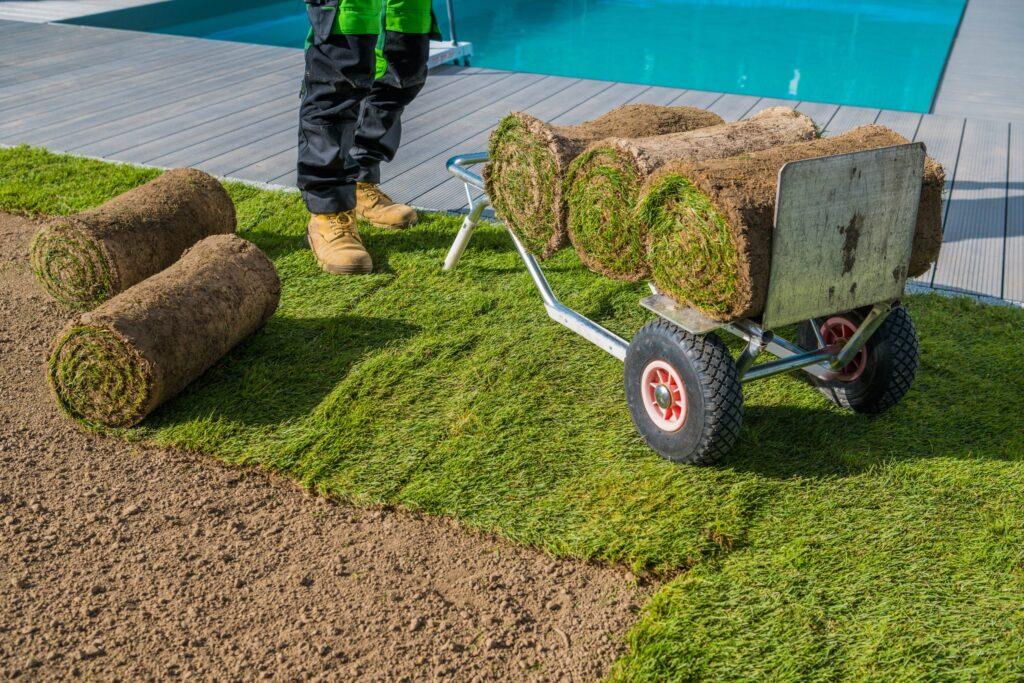
Real turf is cultivated grass, grown on specialist farms and harvested as rolls of living grass with a thin layer of soil and root attached, then laid over a prepared bed to establish as a permanent lawn. Once rooted, it behaves exactly like any natural lawn: it grows, it needs mowing and feeding, and it responds to the seasons, the soil, and the weather it is grown in.
Properly installed turf, with the soil cultivated and levelled correctly first, gives the soft, natural feel and cooling effect that only living grass provides. It also continues to support a small amount of biodiversity in the garden, from worms and soil microbes to the insects that visit any patch of green space.
Artificial Grass (Synthetic Turf)
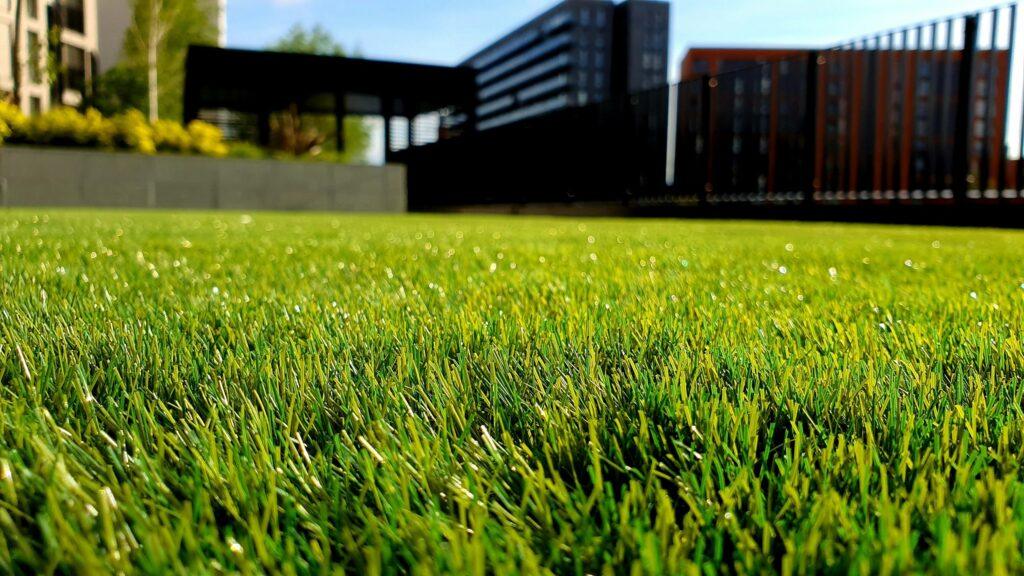
Artificial grass is a manufactured surface made from synthetic fibres, typically polyethylene or polypropylene, tufted into a backing and laid over a free-draining sub-base of compacted aggregate. Modern artificial grass has improved enormously over the last decade: realistic colour variation between blades, soft textures underfoot, and backing systems specifically engineered for drainage and pet use.
Unlike real turf, artificial grass does not grow, does not need water or feed, and stays visually consistent in every season and in every weather condition. Its performance depends almost entirely on the quality of the product and the standard of the ground preparation and sub-base beneath it.
Full Comparison: Real Turf vs Artificial Grass
Durability with Children and Pets
Real turf is naturally soft and forgiving for children’s play, but it wears under heavy, repeated use. The same patch of lawn used daily for football, trampolines, or a dog’s regular running route will thin out, develop bare patches, and turn to mud far faster than the rest of the garden. Recovery requires rest, reseeding, or returfing the worn section, and recovery is slower in autumn and winter when grass is not actively growing.
Artificial grass does not wear in the same way. It tolerates constant foot traffic, repeated digging in the same spot, and daily pet use without thinning or developing bald patches, which is the single biggest reason families with young children or active dogs choose it. The trade-off is that artificial grass, unlike real turf, cannot recover or be renewed once the fibres themselves are damaged or worn flat. Quality, density, and pile height all affect how well it stands up over time.
Maintenance Requirements
Real turf needs regular mowing through spring, summer, and autumn, along with seasonal feeding, occasional scarifying and aerating, and moss and weed treatment. In a typical growing season this adds up to a genuine weekly time commitment, even for a modest family garden.
Artificial grass needs an occasional brush to keep the fibres standing upright, a periodic rinse, and removal of leaves and debris. There is no mowing, no feeding, and no watering required at any point. For households where nobody has the time or inclination for regular lawn care, this difference is often the deciding factor.
Cost: Upfront and Long-Term
Real turf has a significantly lower upfront cost than artificial grass for a comparable area, since the material itself is cheaper and the ground preparation, while still important, is generally less involved than the sub-base required beneath artificial grass. The ongoing cost of real turf, however, continues for as long as the lawn exists: mowing equipment or a gardener, feed, seed, and water.
Artificial grass carries a higher one-off installation cost but very little ongoing spend after that. Over a lifespan of 8 to 15 years, many households find the total cost of artificial grass works out comparable to, or sometimes lower than, the accumulated cost of maintaining real turf to the same standard over the same period, particularly once paid garden maintenance is factored in.
| Factor | Real Turf | Artificial Grass |
| Typical lifespan | Indefinite with care, but quality fades without it | 8 to 15 years depending on quality and use |
| Upfront cost | Lower, typically the most affordable lawn option | Higher, reflects material and sub-base preparation cost |
| Ongoing cost | Mowing, feed, weed control, watering | Minimal, mainly occasional rinsing and brushing |
| Weekly maintenance time | 30 to 60 minutes in growing season | Under 10 minutes most weeks |
| Performance on heavy clay | Needs proper cultivation and drainage to avoid waterlogging | Free-draining once a correct sub-base is installed |
| Winter appearance | Can thin, yellow, or turn muddy in wet spells | Stays green and usable year round |
| Pet urine effect | Can scorch and yellow patches from nitrogen content | No scorching, but needs rinsing to prevent odour |
Drainage and Chelmsford’s Clay Soil Conditions
This is one of the most important practical considerations for any garden across Chelmsford and much of Essex, where the underlying ground is predominantly heavy clay. Clay soil holds water poorly: it becomes waterlogged and sticky after wet Essex winters, and it can dry out, shrink, and crack during a dry summer. For a lawn, this means real turf laid directly onto unimproved clay is prone to surface ponding, moss growth, and muddy patches that get tracked indoors by both children and pets.
For real turf to perform well on Chelmsford’s clay, the ground preparation stage matters enormously. We rotavate and improve the soil with organic matter and grit where needed, and we grade the surface with a gentle fall so surface water moves away rather than sitting on the lawn. This is exactly the groundwork covered in our full turfing installation process.
Artificial grass can actually solve the clay drainage problem more reliably than real turf, but only if the sub-base is built correctly. A free-draining aggregate sub-base, laid to an adequate depth with a permeable membrane and a porous-backed grass on top, allows water to pass straight through rather than sitting on the clay beneath. If the sub-base is too shallow or the surrounding ground has nowhere for water to escape to, even artificial grass will hold standing water after heavy rain. We always design the sub-base depth and any additional drainage runs around the specific clay conditions of the site, not a generic specification.
| In plain terms:
Chelmsford’s clay soil makes ground preparation the deciding factor for both options. Real turf needs proper cultivation and a graded fall to avoid waterlogging. Artificial grass needs a correctly built free-draining sub-base, or it will hold water on the clay beneath it just the same. |
Safety and Hygiene for Pets
Dog urine is high in nitrogen, and concentrated patches on real turf commonly scorch and yellow the grass, leaving unsightly patches that take time to recover even with regular watering and lawn feed designed to counter the effect. Real grass does, however, allow urine and rainfall to drain away naturally into the soil with no extra effort.
Artificial grass will not scorch or yellow from pet urine, and solid waste sits on top of the blades rather than working into soil, which makes daily clearing up quicker. The trade-off is that urine needs somewhere to go: a porous, edge-to-edge draining backing over a correctly built sub-base lets liquid pass straight through, while a poor-quality backing or shallow sub-base allows it to sit in the infill and develop odour over time. Regular rinsing and choosing turf with a permeable backing designed for pet use largely avoids this. One further point worth factoring in for sunny spells: artificial grass absorbs more heat than real grass and can become noticeably warm underfoot and for paws on a hot, direct-sun afternoon, which matters less in a typical Essex summer than it would in a hotter climate, but is still worth considering for a garden that gets full sun for most of the day.
Appearance Through the Seasons
Real turf changes with the seasons. It is at its best through spring and early summer, can thin and yellow under prolonged dry spells without watering, and often looks patchy and muddy through a wet Essex winter, particularly on clay soil that has not been well prepared. This seasonal variation is simply part of owning a natural lawn.
Artificial grass looks essentially the same all year round: green, level, and usable the day after a storm as easily as on a dry summer afternoon. For families who use the garden heavily through autumn and winter, this consistency is one of the clearest practical advantages.
Which Is Right for Your Family in Chelmsford?
Choose Real Turf If:
- You want the natural feel, smell, and cooling effect that only living grass provides
- You or someone in the household enjoys regular lawn care and has the time for it
- Budget for the initial installation is the main priority over the longer term
- The garden gets moderate rather than constant heavy use from children or pets
- You want a lawn that supports a little more natural biodiversity in the garden
Choose Artificial Grass If:
- You have young children or an active dog using the same area of lawn every single day
- Nobody in the household has the time, interest, or physical ability for regular mowing and feeding
- Chelmsford’s clay soil has left previous lawns waterlogged or muddy through the winter
- You want a consistently green, usable garden in every season without exception
- You are happy with a higher upfront cost in exchange for very low ongoing spend
Frequently Asked Questions
Is artificial grass safe for dogs and children?
Yes. Quality artificial grass is manufactured and tested to recognised safety standards and contains no harmful chemicals, fertilisers, or pesticides. It removes exposure to the chemical lawn treatments sometimes used on real grass, and there is no soil for fleas or ticks to live in. The main precaution is surface heat on hot, sunny days, when artificial grass can feel warmer underfoot than real grass.
How long does artificial grass last with pets?
A good quality artificial lawn typically lasts 8 to 15 years with regular pets and children using it, depending on the density and quality of the product and how consistently it is rinsed and maintained. Choosing a turf and backing system designed for pet use, rather than a standard decorative product, makes a meaningful difference to how well it performs over that lifespan.
Will real turf cope with Chelmsford’s clay soil?
Yes, provided the ground is prepared correctly first. Clay soil needs cultivating, improving with organic matter, and grading with a gentle fall so water moves away from the lawn rather than sitting on it. Turf laid directly onto unimproved clay without this preparation is far more likely to waterlog and develop moss and bare patches.
Does artificial grass get too hot in summer for pets?
It can feel noticeably warmer than real grass on a hot, direct-sun afternoon, since synthetic fibres absorb more heat than living grass. In a typical Essex summer this is a minor consideration rather than a serious problem, but for a garden in full sun for most of the day, choosing a lighter-coloured turf and providing shaded areas for pets is sensible.
Can I mix real turf and artificial grass in the same garden?
Yes, and this is a popular solution for families who want the best of both. A common approach is artificial grass in a high-traffic play or pet area close to the house, with real turf and planting in the rest of the garden where wear is lighter. We design this kind of mixed layout regularly across Chelmsford and Essex.
Which option adds more value to a Chelmsford property?
Both a well-kept real lawn and a neatly installed artificial lawn are viewed positively by buyers, and the bigger factor in property value is usually the overall condition and design of the garden rather than which surface was chosen. Artificial grass does carry an advantage for buyers specifically looking for a low-maintenance garden, which is an increasingly common preference.
Get Expert Lawn Advice from PaveRose
PaveRose Driveways and Landscaping has over 30 years of experience installing both real turf and artificial grass across Chelmsford and Essex, including the ground preparation and drainage work that Chelmsford’s clay soil makes essential for either option. We will assess your garden, talk through how your family and pets actually use the space, and recommend honestly whichever option suits you best, including mixed layouts where that makes sense. Whether you are in Chelmsford, Colchester, Southend-on-Sea, or anywhere else across Brentwood, Basildon, Braintree, Harlow, Epping, and the wider Essex region, we can help you decide.
Contact us today for a free site visit and quotation.